Why Cats Knead, Slow Blink, and Bring You Gifts: Cat Behavior Explained
Kneading, slow blinking, and dropping prey on the doorstep are three of the most common cat behaviors. Here is what research and feline experts say each one means, and practical tips for sore laps and unwanted gifts.
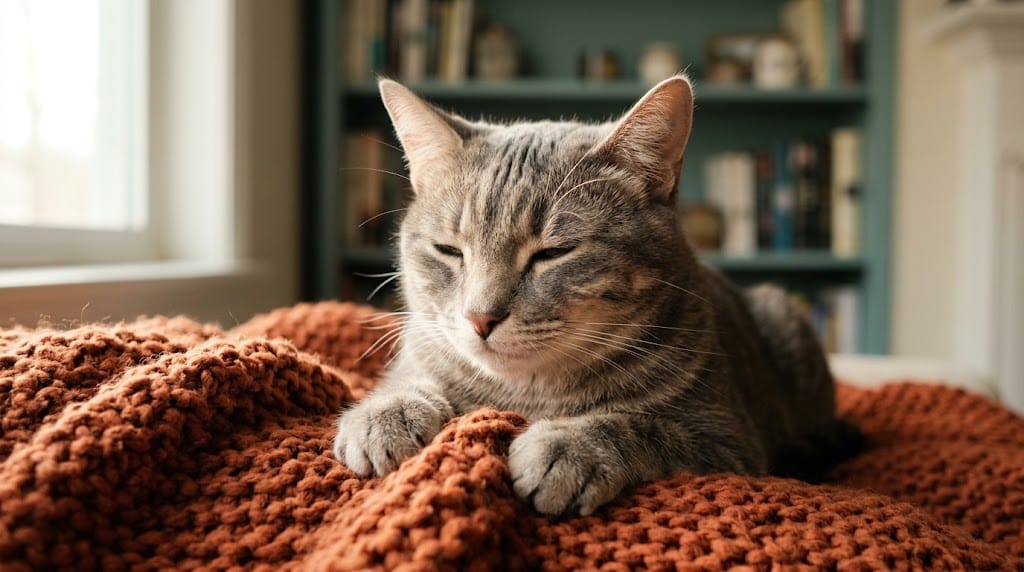
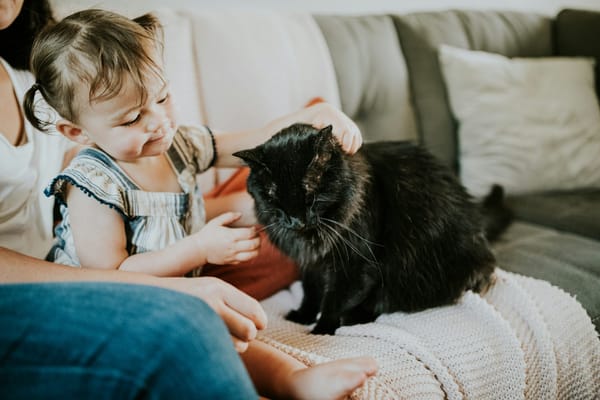
Cats communicate quietly. They do not wag their tails at the door the way dogs do, so many of their signals are easy to miss or misread. Three of the most common, and most talked about, are kneading, the slow blink, and leaving a "gift" on the doorstep.
Here is what feline behavior experts and researchers say each one means, and what, if anything, you should do about it.
Why Do Cats Knead?
Kneading is the rhythmic pushing motion a cat makes with its front paws, using alternate paws (left, right, left), often on a soft blanket, a pillow, or your lap. Cat owners say their cats "make biscuits" because it looks like kneading dough. Some cats extend their claws as they go. Many purr at the same time, and a few drool. It is a common behavior in domestic cats of all ages, male and female.
It starts in kittenhood
The most widely accepted explanation goes back to nursing. Newborn kittens knead around their mother's teats while they suckle, which helps stimulate milk flow. Julia Albright, a veterinary behaviorist and associate professor at the University of Tennessee College of Veterinary Medicine, explains that kneading along with purring also encourages the mother to stay still while the kittens feed.
Many cats keep the behavior into adulthood, and an adult cat may knead the same way it did as a kitten. Experts believe adult kneading is tied to the comfort and security a kitten felt while nursing, which is why it tends to happen when a cat is relaxed, on a soft surface, or with a person it trusts.
Common reasons why cats knead as adults
- Contentment and self-soothing. Dr. Albright notes it is safe to assume a cat who is kneading feels calm, content, and ready to settle down.
- Scent marking. Cats have scent glands between their toes. Pressing their paws into a blanket or your lap may leave their own familiar scent behind, a quiet way to mark their territory and claim favorite sleeping spots. This may be one reason so many cats knead blankets and beds.
- Making a bed. Some experts theorize kneading is a leftover from wild ancestors, who may have trampled long grass or leaves to make a soft place to lie down. This idea is plausible but hard to prove.
- Affection. When your cat kneads your lap, it is generally a sign that it feels safe with you.
Not every cat will knead, and that is fine. A cat that never makes biscuits is not unhappy.
Should you stop a cat from kneading?
Kneading is normal, so there is no need to stop a cat from kneading. If your cat's kneading hurts because of claws:
- Keep your cat's nails trimmed. Ask your vet or groomer to show you how.
- Put a thick blanket or towel on your lap as a soft barrier before your cat settles in.
- Gently redirect your cat to a soft blanket or bed if you need a break.
- Do not scold or push your cat away roughly. It is a contented behavior, and punishment can make your cat wary of you.
Talk to your veterinarian if kneading comes with chewing or sucking on fabric, or if it suddenly increases along with other changes in behavior.
What Does It Mean When a Cat Slow Blinks?
A slow blink is when a cat looks at you, narrows its eyes, then closes them for a moment before opening them slowly. People often call it a "cat smile" or "cat kiss."
What the research says
In 2020, psychologists at the University of Sussex and the University of Portsmouth published a study in Scientific Reports that tested the slow blink in two experiments:
- In the first, with 21 cats from 14 households, cats were more likely to slow blink at their owners after the owners slow blinked at them, compared with when owners did not interact.
- In the second, with 24 cats from 8 households, cats were more likely to approach a researcher's outstretched hand after the researcher slow blinked at them than when the researcher kept a neutral face.
The researchers concluded that slow blinking appears to be a form of positive communication between cats and people. Cats often do it when they are relaxed, and it seems to make a person more approachable to the cat.
How to slow blink at your cat
Professor Karen McComb, who led the study, described the technique this way: narrow your eyes as you would in a relaxed smile, then close your eyes for a couple of seconds. Many cats will respond the same way. Try it from a comfortable distance, with a soft, relaxed face, and do not stare. A direct, unblinking stare can feel threatening to a cat.
The slow blink is also a useful way to say hello to a shy cat or a new kitten. If you just brought one home, our kitten care guide for the first 90 days covers the basics.
Why Do Cats Bring You Dead Animals?
Finding a mouse or bird on the doormat is less charming than a slow blink, but it is just as normal. Indoor-outdoor cats are predators, and hunting is built in.
Hunting is not about hunger
Cats do not need to be hungry to hunt. PDSA, the UK veterinary charity, notes that hunting and eating are not directly linked: a well-fed cat may still stalk and catch prey when something triggers its instincts. Playing with prey before a kill is part of the same instinct, not cruelty.
Why bring it home?
The honest answer is that nobody knows for sure. The most common explanations are:
- Home is safe. Cats Protection, the UK cat welfare charity, says cats bring prey home because it is where they feel safe and secure, a place to eat without being disturbed or to store food for later.
- Sharing with the family group. PDSA mentions a second theory: cats may see their people as part of their social group and share their catch, possibly even trying to "teach" hunting the way mother cats do with kittens.
Whether or not it is truly a "gift," your cat is not trying to upset you. The most important thing is not to punish it. Both charities stress that cats will not understand, and punishment only adds stress.
What to do with a "gift"
- Dead animals: Wear gloves or use a bag, double-bag the animal, put it in the trash, and wash your hands well. Keep children from handling it.
- Live animals: Move your cat to another room, then gently guide the animal outside. If it is injured, call a local wildlife rehabilitator or your vet.
- Keep parasite prevention current. Cats that hunt can pick up worms and fleas from prey, so ask your vet about the right flea and deworming schedule.
How to reduce hunting
A 2021 University of Exeter study of 355 cats in 219 households in England tested several approaches over 12 weeks:
- Switching to a premium cat food in which the protein came from meat reduced the number of prey animals cats brought home by 36%.
- Five to ten minutes of daily play with an owner, using a toy on a string or wand that cats could stalk, chase, and pounce on, cut prey brought home by 25%.
- Brightly colored collar covers reduced birds caught by 42% but had no effect on mammals.
- Bells on collars had no clear overall effect, although results varied from cat to cat.
Cats Protection also suggests keeping cats indoors from dusk until after dawn, when hunting is most active. Keeping cats indoors full time removes the issue entirely and protects cats from cars and other dangers. If you are rethinking your cat's food, our comparison of wet vs. dry cat food is a good starting point, and your vet can help you choose.
Other Cat Behaviors Worth Knowing
- Head bunting and cheek rubbing. Cats have scent glands on their cheeks and rub them on people and objects they consider part of their territory.
- Tail held high. An upright tail as a cat walks toward you is generally a friendly greeting.
- Showing the belly. A cat rolling over shows trust, but many cats do not want a belly rub. Watch for a twitching tail or flattened ears.
- Purring. Usually a sign of contentment, though cats also purr when stressed or unwell. Context matters.
Pets can also pick up on how we feel. If you are curious about that side of the bond, see do pets sense human emotion?
Frequently Asked Questions
Are cats happy when they knead?
Usually, yes. Kneading is generally a sign of a relaxed, content cat, often paired with purring. If kneading is new and intense, or comes with other changes in behavior, ask your vet.
Why does my cat knead me so much?
A cat that kneads you often is usually showing that it feels relaxed and secure with you, much as it did with its mother as a kitten. Some cats knead more when they are settling down to sleep. If constant kneading is new, or your cat seems restless or unwell, check with your vet.
Should I pet my cat while it is kneading?
If your cat enjoys being petted, gentle strokes are fine. Some cats prefer to knead undisturbed. Follow your cat's lead: leaning in and purring means yes, while a twitching tail or moving away means no.
Do cats slow blink to show love?
Research suggests slow blinking is a positive, relaxed signal and helps cats feel comfortable approaching people. "Love" is a human word, but a slow blink is a good sign your cat feels at ease with you.
Should I praise my cat for bringing me prey?
There is no need to praise or punish. Calmly remove the animal, keep your cat away from it, and focus on reducing hunting with play, a meat-rich diet, and indoor time at dawn and dusk.
Why does my indoor cat bring me toys?
Indoor cats often carry toys around and drop them near their people. It draws on the same hunting instinct as bringing prey home, and it is a good cue to start a play session.
Sources
- The Conversation: Why Do Cats Knead With Their Paws? (Julia Albright, University of Tennessee)
- Scientific Reports: The Role of Cat Eye Narrowing Movements in Cat-Human Communication (2020)
- ScienceDaily: Slow Blink Study, University of Sussex
- University of Exeter: Play and Meaty Food Reduce Hunting by Cats
- Cats Protection: Why Does My Cat Bring in Mice?
- PDSA: Vet Q&A, Why Is My Cat Hunting?