Winter Paw Care: Protecting Your Dog From Salt, Ice, and Cold
Road salt, ice melt, and cold air are hard on paw pads. Here is how to protect your dog's paws before and after winter walks, choose a safer ice melt, and spot frostbite, based on ASPCA, AVMA, and AKC advice.
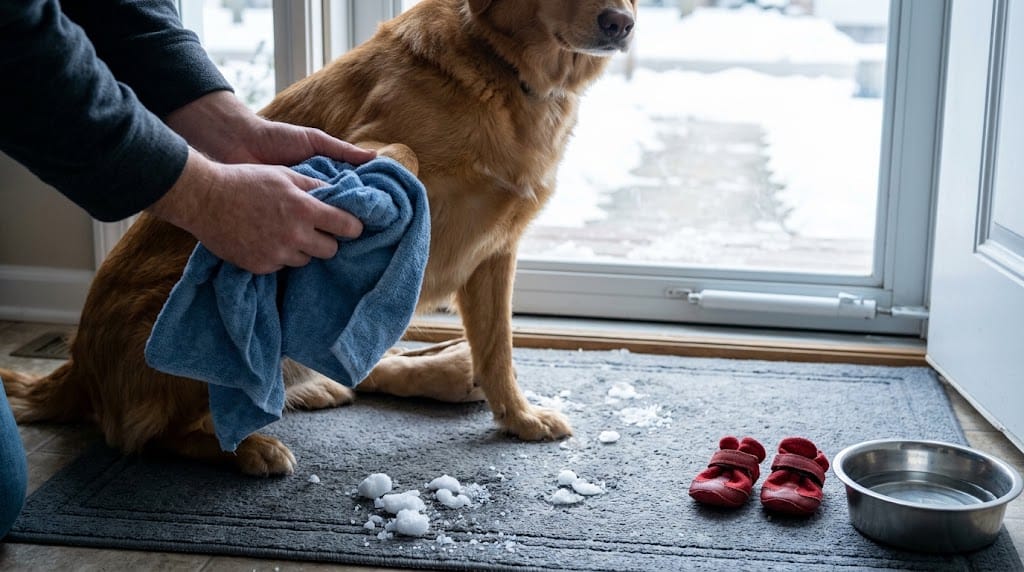
Snow days are fun for kids and dogs alike, but winter is hard on paws. Road salt, chemical ice melt, sharp ice crusts, and dry indoor heat can leave paw pads cracked, sore, and irritated. Some de-icers can also make a dog sick if they lick them off their feet.
The good news: winter paw care does not take much time. A few habits before and after each walk protect your dog's paws all season. Here is what veterinary groups recommend, and what to watch for.
Why Winter Is Hard on Dog Paws
Paw pads are tough, but they are not built for everything winter brings. The main hazards are:
- Road salt and de-icers. Common ice melt products such as sodium chloride and calcium chloride can irritate and dry out paw pads, and they are harmful if a dog licks them off its feet, according to the American Kennel Club (AKC).
- Ice and crusted snow. Jagged ice and the hard crust on top of old snow can cause cuts and abrasions, the American Veterinary Medical Association (AVMA) notes.
- Ice balls between the toes. Snow packs into the fur between the pads and freezes into hard clumps that rub and chafe.
- Dry air. Cold outdoor air and indoor heating both pull moisture from skin, which is one reason pads crack in the colder months.
- Antifreeze. It can collect on driveways and in garages. The ASPCA calls antifreeze lethal for dogs and cats, even in small amounts.
The AVMA also points out that all de-icer products can harm pets. Calcium-based products tend to be more irritating, while urea-based products are gentler but work less well in very cold temperatures. Most exposures cause an upset stomach or mild skin irritation, but heavy contact can lead to dry, cracked, bleeding, or burned paws.
Before the Walk: Protect Your Dog's Paws
Try dog booties
Dog booties (sometimes called dog shoes) are the most complete protection. They keep snow, ice, and road salt off the pads and stop your dog from licking chemicals off its feet later. Many dogs walk oddly in booties at first. Put them on indoors for a few minutes at a time, reward your dog with treats, and build up slowly before heading out on a long walk.
Use a paw balm or paw wax
If your dog will not wear booties, a protective layer helps. The ASPCA suggests massaging petroleum jelly (such as Vaseline) or another vet-approved paw protectant into the pads before going outside. The AVMA mentions wax-based, petrolatum, or lanolin products. Paw wax products such as Musher's Secret are made for this job. A thin layer is enough; wipe off any extra so your dog does not lick a mouthful of it.
Keep the fur between the pads trimmed
Long fur between the toes is where ice balls form. The AKC recommends keeping that hair short. Use blunt-tipped grooming scissors, or ask your groomer to tidy it during regular grooming. Never cut toward the pad itself.
Plan shorter walks on the coldest days
The ASPCA's rule of thumb is simple: if it is too cold for you, it is probably too cold for your pet. On harsh winter days, take shorter walks, stick to cleared paths when you can, and avoid the salted edges of sidewalks and roads where melt piles up. Short-haired and smaller dogs often benefit from a sweater or coat, and the ASPCA advises against shaving long-coated dogs down to the skin in winter.
After the Walk: Wash, Dry, and Check
This is the single most useful winter habit. The ASPCA and AVMA both recommend cleaning your dog's paws after every walk to remove ice, salt, and chemicals.
- Wipe or rinse. Use a damp cloth or a bowl of lukewarm water by the door. Clean the pads, between the toes, the legs, and the belly, since de-icers cling to fur there too.
- Melt ice balls gently. If clumps of ice are stuck in the fur, soak them in warm water rather than pulling them out, the AKC advises.
- Dry thoroughly. Damp fur between the toes can chap and crack. An absorbent towel works well.
- Inspect each paw. Look for cuts, cracked pads, swelling, redness between the toes, or a foreign body such as a sliver of ice or gravel.
- Moisturize if needed. A paw balm made for dogs can soothe dry pads. Skip human lotions with fragrances or ingredients you would not want your dog to lick.
Kids can help with this routine. Wiping paws by the door is a good job for an older child, with an adult doing the final check. It is a simple way to teach kids responsibility by caring for pets.
Signs of Paw Trouble to Watch For
Call your veterinarian if you notice any of these:
- Cracked, bleeding, or raw paw pads
- Limping or holding up a paw after a walk
- Constant licking or chewing at the feet
- Swollen paws or red, irritated skin between the toes
- Vomiting, drooling, or diarrhea after a walk on salted pavement
Frostbite and hypothermia
Fur does not make dogs immune to the cold. The AVMA says dogs and cats can get frostbite and hypothermia, just like people. Paws, ears, and the tail are the most vulnerable, especially when wet, according to VCA Animal Hospitals.
Signs of hypothermia include whining, shivering, seeming anxious, slowing down or stopping, weakness, or looking for warm places to burrow. Frostbite is harder to spot. VCA lists pale, gray, or bluish skin, coldness, swelling, pain, and later blisters or darkened skin, and notes that signs may take several days to appear.
If you suspect frostbite, move your dog somewhere warm and call your vet right away. VCA advises warming the area with warm (not hot) water, and not rubbing or massaging it. Do not use a heating pad or hair dryer on the area, and do not give any pain medicine unless your vet tells you to.
Choosing a Pet-Safe Ice Melt at Home
You cannot control what your neighbors or the city put on the sidewalk, but you can choose what goes on your own steps and driveway. The AKC suggests a pet-safe ice melt, which also helps if your dog tracks some indoors.
Keep one caution in mind: the AVMA notes that no standard backs the label "pet-friendly" on de-icers. Ask your veterinarian which products they recommend. Store all ice melt, antifreeze, and other winter chemicals where pets and children cannot reach them, and clean up antifreeze spills right away. The ASPCA suggests choosing antifreeze made with propylene glycol rather than ethylene glycol.
If you think your dog swallowed antifreeze or a large amount of ice melt, call your veterinarian or the ASPCA Animal Poison Control Center at (888) 426-4435 immediately. A consultation fee may apply.
More Winter Tips for Dog Owners
- Keep your dog leashed in snow. The ASPCA notes that dogs can lose their scent trail in snow and ice and get lost. Make sure ID tags and microchip details are current. Our guide on what to do if your pet goes missing covers the steps to take if it happens.
- Bathe less often. Frequent baths strip natural oils and can leave skin dry and flaky in winter, per the ASPCA.
- Run a humidifier. Keeping indoor air from getting too dry helps both skin and paws.
- Offer a warm bed away from drafts. The ASPCA suggests comfortable bedding off cold floors. This matters most for puppies, senior dogs, and dogs with health conditions.
- Watch the holidays too. Winter brings other risks, from chocolate to tinsel. See our list of holiday hazards for pets.
Frequently Asked Questions
Is Vaseline or coconut oil better for dog paws?
The ASPCA names petroleum jelly as one option for protecting paw pads before a walk. A balm or wax made for dogs is designed to stay on the pad and is safe if licked in small amounts. Ask your vet before using any product on paws that are already cracked or bleeding.
How do I know if the sidewalk salt is hurting my dog?
Watch for limping, lifting paws during the walk, licking the feet afterward, and redness between the toes. If your dog shows these signs often, try booties, change your route, and clean paws as soon as you get home.
Why are my dog's paws cold?
Paws often feel cool after time outdoors and should warm up quickly inside. Paws that stay cold, look pale or bluish, or seem painful can be a sign of frostbite or a circulation problem. Call your vet.
Do all dogs need booties in winter?
No. Many dogs do fine with paw balm, shorter walks, and a careful rinse afterward. Booties are most helpful for dogs who walk on heavily salted streets, dogs with sensitive or injured pads, and dogs whose feet collect ice balls.
Can I use dish soap to wash my dog's paws?
For everyday winter care, lukewarm water and a cloth are usually enough to remove salt. Soaps can dry the pads further. If your dog's paws need a real wash, ask your vet which dog shampoo to use.