Cats as Family Members: What Life With a Cat Is Really Like
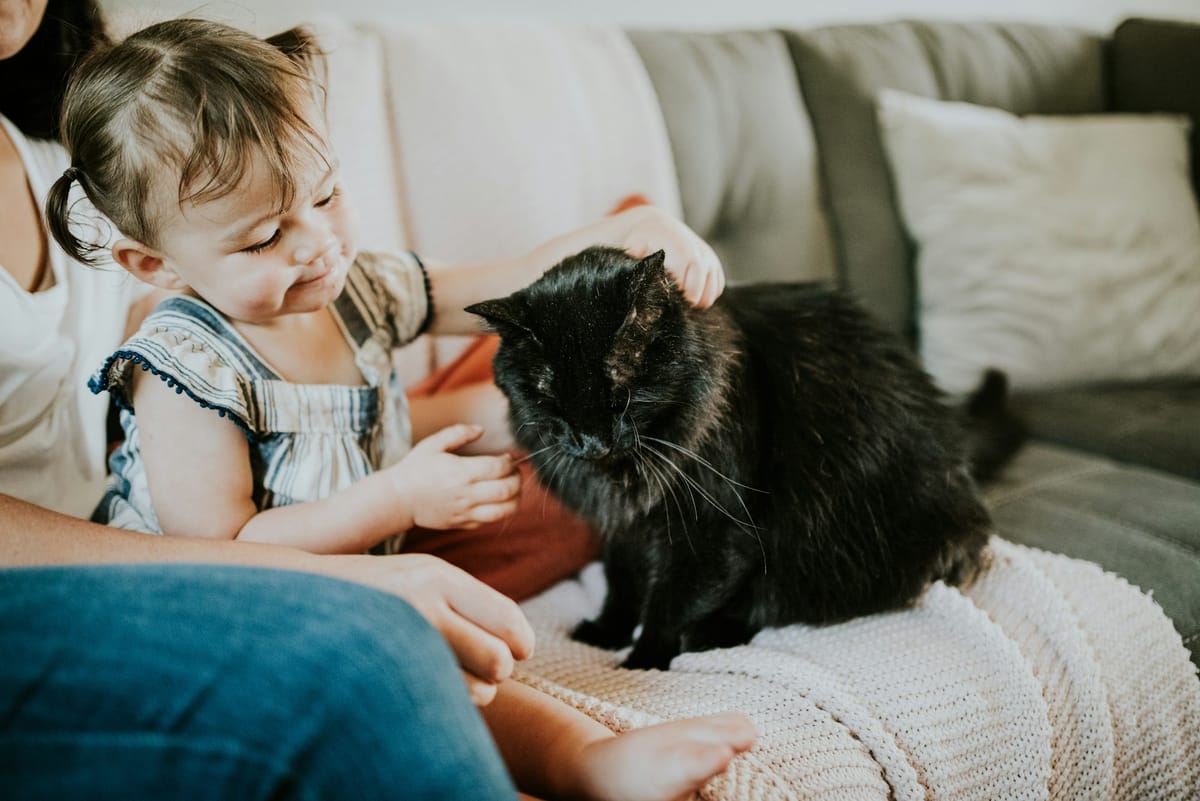
Most families who have a cat do not think of it as "the pet." In an April 2023 Pew Research Center survey, 97% of US pet owners said their pets are part of the family, and 51% said they are as much a part of the family as a human member. If you are thinking about adding a cat, here is what pet ownership looks like day to day: the companionship, the work, the costs, and what changes when there are kids in the house.

What a cat brings to a family
Cats offer a quieter kind of companionship than a dog. Many cats will follow you from room to room, sleep on a bed, sit in a lap in the evening and purr while a child reads next to them. Others prefer to sit nearby rather than be held. Personality varies a lot from one cat to the next, which is why meeting a cat before you adopt matters more than picking a breed. Shelters and rescues can often tell you which adult cats have lived with children or a dog and cat household before.
Age matters too. A kitten is playful and changes fast, but it needs more supervision and more training in its first year. An adult cat's personality is already set, so you know what you are getting. For a family with young kids, a calm adult cat that is used to children is often the easier start.
Daily care: food, litter, play and grooming
Cats are less work than a dog in some ways. They do not need to be walked, and they groom themselves. But owning a cat is still a daily commitment.
- Food and water: measured meals once or twice a day and fresh water. Ask your vet how much your cat should eat. The AAHA/AAFP guidelines make preventing weight gain a focus for young adult cats.
- Litter box: feline veterinary guidelines from the AAFP and ISFM recommend one litter box per cat plus one extra, in more than one spot in the house, away from food and water. Scoop at least once a day. If a cat stops using the box, the AAFP's first advice is to look at the box itself: how clean it is, how big it is and where it sits.
- Play: cats are hunters, and indoor cats need that energy to go somewhere. Short play sessions every day with a wand toy work well, and they are a good job for kids.
- Scratching and climbing: a sturdy scratching post and some vertical space, like a cat tree or a cleared shelf, give a cat a place to scratch other than your couch.
- Grooming: short-haired cats need little help. Long-haired cats need regular brushing to prevent mats.
If you are bringing home a kitten, our kitten care guide for the first 90 days covers feeding, litter training and first vet visits in detail.
What a cat costs
The ASPCA's cost estimate (its table is labeled a 2021 update) puts a cat at about $1,904 for the first year and about $1,149 a year after that. The first year is higher because it includes spay or neuter surgery, first vaccines and supplies. The yearly figure covers food, routine vet care, preventive medicine, litter, toys and pet insurance. Prices have risen since 2021 and vary a lot by where you live, so treat those numbers as a floor, and keep some savings for an unplanned vet bill.
Kids and cats
Cats and children can get along very well, but the cat needs to be able to say no. A cat that is grabbed, chased or held after it wants to leave may scratch or bite. A few house rules help:
- Let the cat come to you. Pet it gently along the back and head, not the belly or tail.
- Never pick up the cat without an adult's OK, and always support its back legs.
- Leave the cat alone when it is eating, using the litter box or hiding.
- Give the cat a high spot or a room where kids cannot follow.
- Use toys, not hands, for play. The CDC advises avoiding rough play, especially with kittens.
Supervise toddlers every time they are with the cat. Watch for a twitching tail, flattened ears or a cat that keeps trying to walk away. Our post on teaching kids to respect animal boundaries has more ways to teach gentle handling.
If a cat does scratch or bite, wash the area well with soap and water. The CDC notes that even small scratches can spread germs, including the bacteria behind cat scratch disease. Call your doctor if a bite looks deep or the area gets red, swollen or painful.
Vet care and vaccines
A family cat needs a vet who sees it when it is healthy, before anything is wrong. The AAHA and AAFP feline life stage guidelines group cats as kittens (up to 1 year), young adults (1 to 6), mature adults (7 to 10) and seniors (over 10), with care that changes at each stage. They recommend that senior cats be seen at least every six months.
For kittens, the AAHA/AAFP vaccination guidelines list core vaccines that protect against feline panleukopenia, herpesvirus and calicivirus, plus rabies and feline leukemia virus. Repeat rabies shots follow the vaccine label and your local law. After the kitten series, your vet will set a schedule based on your cat's age, health and whether it goes outside. Ask about spay or neuter, a microchip, and year-round parasite prevention too.
Indoors or outdoors?
This is one of the biggest choices you will make. Outdoor cats face cars, other animals, fights with other cats, diseases and getting lost. The AVMA says keeping owned cats confined, whether in an enriched indoor home, an outdoor enclosure or on leash walks, can reduce those risks, and its rabies guidance tells owners to keep cats indoors. The AAFP's 2024 position statement puts safety first and suggests controlled outdoor access, such as a cat enclosure, a cat-safe fence or walks on a leash, for cats that want time outside.
An indoor-only cat needs more from you, not less. The AAFP lists what indoor cats need: play that lets them hunt, places to climb and rest, food and water stations, and clean litter. A window perch with a view of birds goes a long way. Whatever you choose, a microchip and a collar with ID help bring home a cat that slips out the door.
Allergies, pregnancy and other health questions
If someone in your home has allergies, find out before you adopt. The American Academy of Allergy, Asthma and Immunology says cat allergens are proteins in dander, saliva and urine, not the fur itself, and that there are no truly hypoallergenic breeds. A cat may cause fewer symptoms than another cat, but that varies by the individual animal. The AAAAI suggests spending time with a cat before committing, seeing an allergist, keeping the cat out of bedrooms and using HEPA filters. Our post on pet allergies and asthma in kids covers symptoms to watch for.
If you are pregnant, the CDC says you do not need to give up your cat. Have someone else change the litter if you can, because cat feces can carry the parasite that causes toxoplasmosis. If you must do it, wear gloves and wash your hands afterward. Changing the litter daily also helps, since the parasite takes 1 to 5 days to become infectious after it is shed.
Is a cat right for your family?
A cat fits well with families who want a pet that lives inside with them, who can handle daily litter and play, and who can budget for yearly vet care. The AAHA/AAFP guidelines do not even count a cat as senior until after age 10, so you are signing up for many years of care. If that sounds like your household, a cat can become one of the most settled members of it, and most cat owners would tell you the purr at the end of a long day is worth the litter.
Sources: Pew Research Center (July 2023 pet owner survey); ASPCA pet care cost estimates (2021 update); AAHA/AAFP Feline Life Stage Guidelines (2021) and Feline Vaccination Guidelines (2020); AAFP/ISFM litter box guidance; AAFP Indoor/Outdoor Lifestyle Position Statement (2024); American Veterinary Medical Association; American Academy of Allergy, Asthma and Immunology; CDC Healthy Pets and toxoplasmosis guidance.