
Halloween Candy and Pets: What to Do If Your Dog Eats Chocolate or Xylitol
Chocolate, sugar-free candy, raisins, wrappers and glow sticks: what to do in the first few minutes if your dog or cat gets into the Halloween candy, which symptoms matter, and the poison hotline numbers to save now.
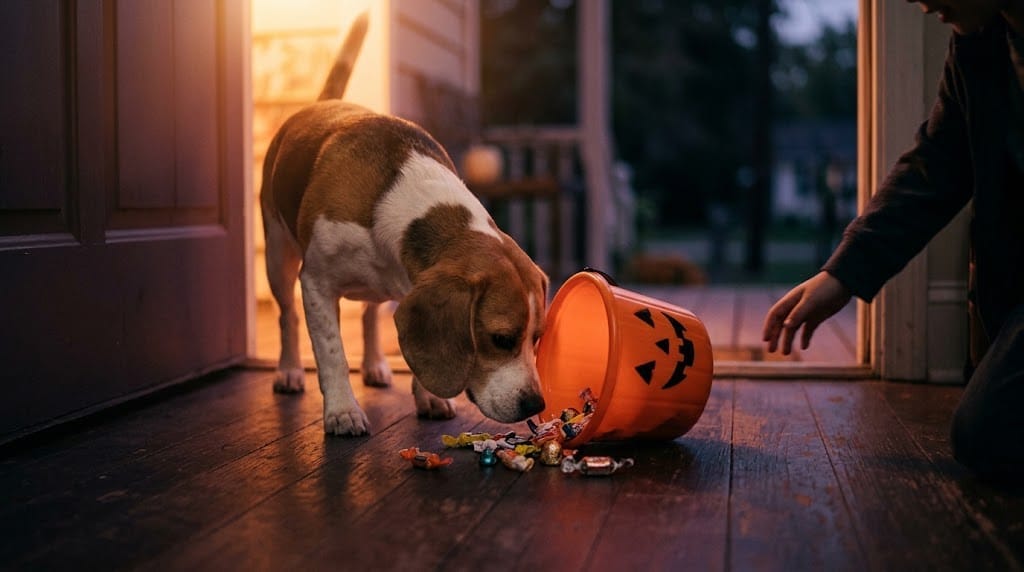
Halloween puts more candy within reach of pets than any other night of the year. Bags get left on the floor, bowls sit by the door, and kids stash their haul in bedrooms where a dog's nose finds it fast. Most of the time a dog that eats Halloween candy ends up with nothing worse than an upset stomach. A few ingredients, though, can make a dog seriously ill, and the amount that matters can be smaller than you would guess.
This guide covers the Halloween candy risks vets see most: chocolate, xylitol, raisins, wrappers and lollipop sticks, and glow sticks. It also walks through what to do in the first few minutes if your dog ate Halloween candy, and which symptoms mean you should head to an emergency vet.
If your pet just ate something and you are worried, call now:
- ASPCA Animal Poison Control Center: (888) 426-4435, open 24 hours a day, 365 days a year. A consultation fee may apply.
- Pet Poison Helpline: (855) 764-7661, open 24/7. The fee is $89 per incident, and follow-up calls are included.
- Or call your veterinarian or the nearest emergency vet.
My Dog Ate Halloween Candy: What to Do First
Stay calm and work through these steps in order.
- Move your pet away from the candy and pick up anything left on the floor, including wrappers.
- Figure out what was eaten. Gather the wrappers or packaging. Read the ingredient list for chocolate type and for xylitol, which may also be listed as birch sugar or wood sugar.
- Estimate how much. Count wrappers, check how full the bag was, and note the time it happened as closely as you can.
- Know your pet's weight. Dose depends on body weight, so poison control and your vet will ask for it.
- Call poison control or your vet right away, even if your pet seems fine. Some problems, like those from xylitol and raisins, can start before you see obvious signs or show up hours later.
- Do not make your pet vomit unless a vet or poison control tells you to. Inducing vomiting at home is not safe for every pet or every substance.
When you call, have the packaging nearby and be ready to share your pet's species, breed, age, weight, any symptoms, and how long ago the candy was eaten.
Chocolate: Why the Type of Chocolate Matters
Chocolate is toxic to dogs because it contains theobromine and caffeine, stimulants that dogs break down much more slowly than people do. The darker and less sweet the chocolate, the more theobromine it contains. That is why a small piece of baking chocolate can be more dangerous than a whole milk chocolate candy bar.
According to the Merck Veterinary Manual, approximate theobromine levels are:
| Type of chocolate | Theobromine (mg per ounce) |
|---|---|
| Dry cocoa powder | About 807 |
| Unsweetened baker's chocolate | About 440 |
| Semisweet and sweet dark chocolate | About 150 to 160 |
| Milk chocolate | About 64 |
| White chocolate | About 1 |
Merck lists mild signs at about 20 mg of theobromine per kilogram of body weight, heart effects at 40 to 50 mg/kg, and seizures at 60 mg/kg or more.
How much chocolate is a problem for a 20-pound dog?
Here is a rough example using those numbers for a 20-pound (about 9 kg) dog. It is for understanding only. Real candy varies, especially high-cacao dark bars, so call poison control instead of doing math at the kitchen counter.
- Milk chocolate: mild signs possible from about 2.8 ounces; heart effects possible from about 5.7 ounces.
- Semisweet or dark chocolate: mild signs possible from about 1.2 ounces; heart effects possible from about 2.4 ounces.
- Baker's chocolate: mild signs possible from less than half an ounce.
A small dog that gets into a bag of mini chocolate bars, or any dog that eats baking chocolate or cocoa powder, needs a call right away. White chocolate contains very little theobromine, but it is still rich and fatty, so call your vet if your dog ate a lot of it.
Signs of chocolate toxicity
Signs usually appear within 6 to 12 hours of ingestion and can include:
- Vomiting and diarrhea
- Restlessness, panting, and hyperactivity
- Increased thirst and urination
- Muscle tremors
- A racing or irregular heartbeat
- Seizures in severe cases
Because theobromine leaves a dog's body slowly, signs can last up to 72 hours in severe cases. Vets often treat chocolate toxicity by inducing vomiting in the clinic and giving activated charcoal, along with fluids and heart monitoring when needed.
Xylitol: The Sugar-Free Candy Danger
Xylitol is a sugar substitute found in sugar-free gum, mints, and candy. It is also used in some baked goods, nut butters, chewable vitamins, toothpaste, and cough syrup. In people it is harmless. In dogs, the FDA explains, it triggers a rapid release of insulin that can cause a steep drop in blood sugar within 10 to 60 minutes. Larger amounts can also damage the liver.
Watch for:
- Vomiting
- Weakness or low energy
- Staggering or trouble walking
- Collapse
- Seizures
Some serious effects can be delayed 12 to 24 hours, so a dog that seems normal right after eating sugar-free gum still needs care. The FDA's advice is plain: if you think your dog ate xylitol, take your dog to your vet or an emergency animal hospital immediately.
Halloween tip: candy is not the only source. Check purses, backpacks, and coat pockets for sugar-free gum and mints, and keep them zipped and off the floor during parties.
Raisins, Grapes, and Chocolate-Covered Raisins
Some families hand out small boxes of raisins or trail mix instead of candy. Raisins and grapes can cause sudden kidney injury in dogs. Researchers at the ASPCA Animal Poison Control Center have linked the problem to tartaric acid, which dogs cannot process well. The amount of tartaric acid varies a lot from fruit to fruit, so there is no known safe number of raisins for a dog.
Chocolate-covered raisins carry both risks at once. Vomiting is often the first sign. If your dog ate any raisins or grapes, call poison control or your vet even if your dog seems fine.
Candy Wrappers and Lollipop Sticks
Dogs often eat candy wrappers along with the candy, and cats like to bat wrappers around and chew them. The ASPCA warns that swallowed foil and cellophane can cause vomiting and intestinal blockage. Lollipop sticks and other hard pieces can also get stuck in the stomach or intestines.
Call your vet if a pet that swallowed wrappers or sticks shows any of these signs in the following days:
- Repeated vomiting
- Not eating
- Straining or no bowel movements
- A painful or bloated belly
- Unusual tiredness
Glow Sticks and Glow Jewelry
Glow sticks and bracelets are popular for trick-or-treat visibility, and cats in particular love to chew them. The liquid inside is very bitter. Pet Poison Helpline notes that biting into one causes fast drooling, foaming at the mouth, gagging, and sometimes vomiting. It looks alarming, but it is usually considered mild.
If your pet bites a glow stick:
- Offer a small amount of food or water to help clear the taste.
- Wipe the liquid off fur and paws so your pet does not lick more of it off later. Cats groom constantly, so this matters most for them.
- Rinse the eyes with water if any liquid splashed into them.
- Call poison control or your vet, especially if your pet swallowed pieces of the plastic casing.
What About Cats?
Cats are less likely than dogs to go after sweets, but they are not immune to chocolate, and they are the most likely pets to play with wrappers and chew glow sticks. Ribbon, string, and costume pieces are also a cat favorite. Use the same hotlines and the same rule: call first, and do not try home remedies.
How to Keep Halloween Candy Away From Pets
- Give candy a home. Store trick-or-treat bags in a closed cabinet, on a high shelf, or in a container with a latching lid. Bedroom floors and backpacks are not safe storage.
- Make a family rule. Kids eat candy at the table, not on the couch or the floor, and wrappers go straight into a lidded trash can.
- Watch the door. A candy bowl near the entry is easy to reach, and an open door is a chance for a pet to slip out. A gated room or crate during trick-or-treat hours solves both problems.
- Know which candy is sugar-free. Keep sugar-free gum, mints, and candy separate and up high.
- Post the numbers. Save both poison control numbers in your phone and put them on the fridge before October 31.
- Plan for the night. Know where your closest 24-hour emergency vet is and how long it takes to get there.
If you want to put together a full plan, our guide to creating an emergency plan for your family and pets is a good place to start. And if you want a seasonal treat your dog can safely enjoy, read our post on pumpkin for dogs and cats. The same habits will help when the winter holidays arrive; see our holiday hazards for pets guide.
How to Talk to Kids About Pets and Candy
Kids are usually the ones carrying the candy, so they are your best partners. Keep it simple and matter of fact:
- "Candy is a people food. Some candy can make dogs very sick."
- "If you drop a piece, pick it up right away and tell a grown-up if the dog got it."
- "You will not be in trouble for telling us. Telling us fast is how we keep the dog safe."
That last point matters. A child who is afraid of getting in trouble may not mention the empty wrapper, and time counts with xylitol and chocolate.
Frequently Asked Questions
My dog ate one piece of milk chocolate. Will they be okay?
One small piece of milk chocolate is unlikely to cause serious problems in a medium or large dog, though it may upset the stomach. Small dogs, dark or baking chocolate, and multiple pieces change the picture. Call poison control or your vet with the type, amount, and your dog's weight so they can tell you whether to come in.
How long after eating chocolate will a dog show symptoms?
Signs of chocolate toxicity usually appear within 6 to 12 hours and can last up to 72 hours in severe cases. Call as soon as you know your dog ate chocolate rather than waiting for symptoms.
Should I make my dog throw up after eating candy?
Only if a veterinarian or poison control tells you to. Inducing vomiting is not right for every situation, and it can cause its own problems if done incorrectly. Call first.
Is sugar-free candy safe for dogs?
No. Many sugar-free candies, gums, and mints contain xylitol, which can drop a dog's blood sugar dangerously fast and damage the liver. Check labels for xylitol, birch sugar, or wood sugar, and treat any xylitol ingestion as an emergency.
Are glow sticks poisonous to cats and dogs?
The liquid in glow sticks is usually considered mildly toxic, but it tastes very bitter and causes heavy drooling and gagging. Offer food or water, wipe the liquid off fur, and call poison control or your vet, especially if your pet swallowed pieces of plastic.
Sources
- ASPCA Animal Poison Control Center
- Pet Poison Helpline
- Merck Veterinary Manual: Chocolate Toxicosis in Animals
- U.S. FDA: Paws Off Xylitol; It's Dangerous for Dogs
- ASPCA: People Foods to Avoid Feeding Your Pets
- ASPCApro: Toxic Component in Grapes and Raisins Identified
- ASPCA: Halloween Treats Safety Tips
- Pet Poison Helpline: Glow Jewelry


