Can Every Dog Learn to Use Press Talking Buttons?
Written by Jude Williams January 30, 2026
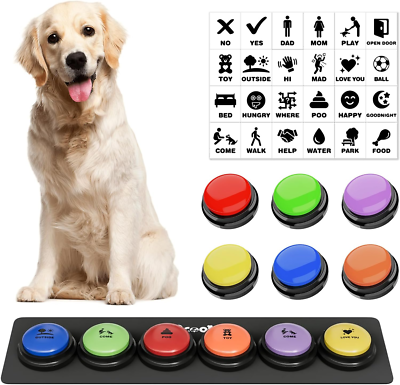
Many dog owners like to think their dog is very clever, especially when it seems to understand phrases like “outside” or “play.” But can every dog learn to use talking buttons to actually express what they want? As more pet parents explore ways to communicate with their dogs, the use of speech buttons—devices that allow dogs to press the button to say specific words—has surged in popularity. While some breeds like the border collie have shown that dogs can learn lots of buttons and even string words together, not every dog needs or uses buttons the same way.
According to the director of the comparative cognition lab at UCSD, some dogs pick up on these cues quickly, while others may struggle or lose interest. Understanding how these dog buttons work, and how to start teaching your dog without needing formal training, is key. Whether you're using dog buttons as a fun experiment or a serious attempt at building speech-language skills, it helps to know why buttons work better for many dogs—and what separates a success story from another Clever Hans scenario.
Teach Your Dog to Talk with Buttons
Pet parents everywhere are wondering: Can my dog talk with buttons? While it’s true that not every dog will learn to fluently press buttons or form phrases, most dogs can learn to use buttons in meaningful ways with the right training, consistency, and motivation.
Some dogs may only master one or two communication buttons, while others might learn dozens of words and phrases. The process depends on your dog’s personality, environment, and your dedication to teaching your dog to use them.
Great candidates for button training:
- Curious, alert dogs that watch your every move
- Dogs who already show strong body language cues
- Pups that enjoy dog training or puzzle toys
- Dogs who seem like they’re trying to communicate
Even if your dog could only learn one button that says "outside," that button could offer them a more enriched life.
How Do Talking Buttons Work
Teaching Your Dog to Talk with Buttons
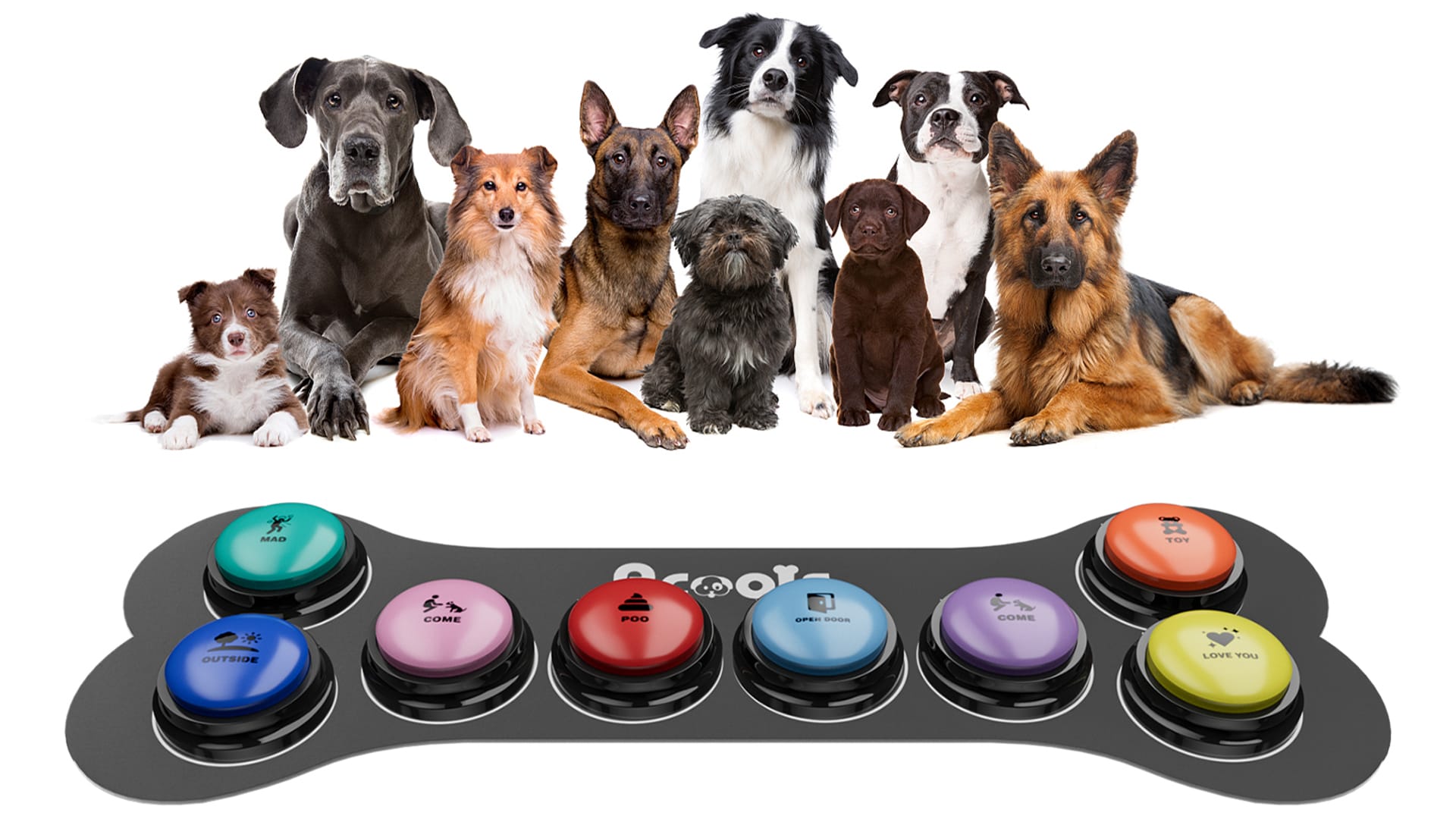
When you teach a dog to talk using buttons to talk, you’re essentially introducing a new form of language—one they access with their paw, nose, or snout.
To begin:
- Start with one button (like “play” or “outside”)
- Use it consistently before performing the action
- Encourage your dog to interact with the button
- Celebrate every successful button press
This process helps your dog associate the word with an action, laying the foundation for them to learn to talk using buttons. Over time, most dogs learn to use multiple buttons to express a range of needs and wants.
🐕 Mini Checklist: Teaching Dogs to Use ButtonsStart small: one word, one buttonReinforce every button press with immediate actionUse body language and cues for contextAdd more buttons slowly and intentionallyStay consistent—it’s just like training any behavior
Use Talking Buttons the Right Way
If you're wondering how to teach my dog to use buttons, remember that training sessions should be short, positive, and reward-based. Dogs respond best to enthusiastic praise, treats, and routines.
Many pet parents mistakenly believe their dog already understands the words, but building those associations takes time and repeated exposure.
What Happens When Dogs Learn to Talk Using Buttons?
From One Word to Full Phrases
Over time, some dogs begin to press buttons in combination, forming what seem like mini-sentences. While it's still under investigation by the Comparative Cognition Lab at UC, examples from dog Stella and dog Bunny suggest dogs may link words into context-driven expressions.
Examples of button combinations:
- “Play + Dad”
- “Outside + Now”
- “Where + Ball”
These combinations suggest that dogs use memory, emotion, and observation to form series of buttons that match their needs and wants.
Dogs Are Amazing – But Not Human
It’s easy to get swept up in the idea of a talking dog, but it’s important to remember that dogs don’t fully understand the words in the way humans do. Many are likely responding to your reaction, forming associations through operant conditioning, or simply pushing buttons they’ve learned lead to positive outcomes.
Still, that doesn’t take away from the magic of seeing your dog pushing buttons to express themselves.
How Many Buttons Should I Use?
Adding New Buttons and Words
Once your dog has mastered one or two buttons, you can add words that connect to their daily routines. But don't go too fast. Buttons in the right locations matter—placing a "water" button near the water bowl or a "play" button near their toys helps your dog contextualize meaning.
Great buttons to add after the basics:
- “Water”
- “Help”
- “Love you”
- “All done”
- “Stranger”
- “Scared”
The key is to add words your dog hears often and to place the button near the related activity.
💬 Want a tip for success?
Repeat the button press out loud every time you do an action. Dogs learn by hearing, seeing, and associating.
The Role of Science in Dog Button Communication
What the Comparative Cognition Lab at UC San Diego Says
At the Comparative Cognition Lab at UC San Diego, researchers are actively gathering data to understand whether dogs understand what they are saying when they press buttons.
Under the direction of Federico Rossan, the lab has invited pet parents using talking buttons to submit videos and data. This includes:
- Whether dogs talk using combinations
- If button dogs understand time, place, or emotional concepts
- Whether dogs can learn symbolic language through pressing buttons
So far, the lab believes that dogs are probably learning using operant conditioning, but they haven’t ruled out more complex understanding. The goal is to separate intentional communication from random behavior.
Social Media, Hype, and Real Results
The Rise of the Talking Dog Trend
Thanks to TikTok, interest in using buttons to talk has exploded. The world met Bunny, a talking dog with a growing “vocabulary” of over 50 buttons. Bunny’s videos show her pushing buttons like "outside," "friend," "ouch," and even "why?"
While the videos are fascinating, scientists warn that they may not show the full picture. Editing, repetition, and human cues may influence the dog’s behavior more than viewers realize.
But even if your dog doesn’t go viral, teaching them to talk with buttons can still be a rewarding and fun bonding experience.
Should You Try Buttons With Your Dog?
Absolutely! If you’ve ever wondered what your dog would say if they could talk, this is your chance to explore those possibilities. Even one button every time your dog wants to go out or play is a step toward deeper understanding.
🐾 Why Try Using Buttons to Talk With Your Dog?Strengthens the human-animal bondHelps dogs express their needs and wantsAdds cognitive stimulation and funGives your dog more ways to talk using cuesOffers a fresh perspective on how dogs are amazing
Final Thoughts: What It Means When Dogs Talk With Buttons
Teaching your dog to use buttons doesn’t guarantee full sentences or deep philosophical insights—but it can give you a glimpse into how they experience the world.
Whether your dog could learn to talk using five buttons or fifty, the important part is the process. As Christina Hunger proved with dog Stella, dogs have the ability to learn to use the buttons, express feelings, and become active participants in their own care.
The science at the University of California continues to explore what’s really going on in the canine mind. But for now, one thing is clear: when your dog presses a button, they’re doing more than making noise—they’re trying to tell you something.


